Help shape the future of Chipping Norton Town Hall
Chipping Norton Town Hall has been at the heart of civic and community life for more than 180 years.
The Town Council is developing plans to conserve the Town Hall, improve access, reduce its environmental impact and make it a more welcoming and flexible community building.
The project is in its early stages. We are listening to local people, learning more about the building and developing plans for its future. We are also exploring the funding needed to carry out the work.
About the Town Hall
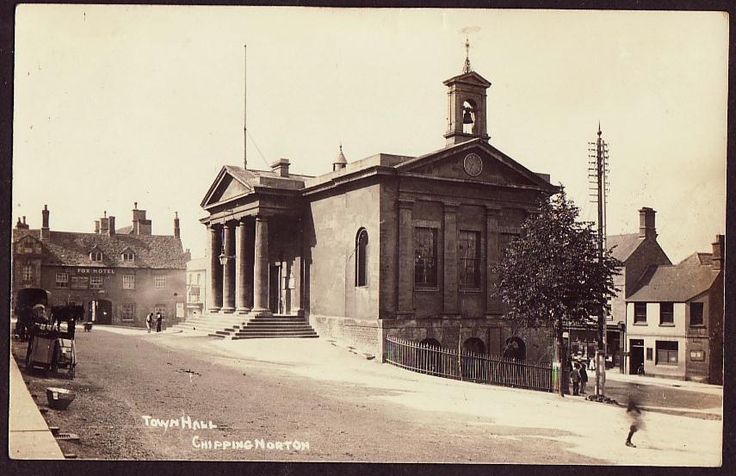
Chipping Norton Town Hall was built in 1842. George Stanley Repton designed it, and it stands at the southern end of the Market Place.
The Town Hall is a Grade II* listed building. It is an important part of Chipping Norton’s history and townscape.
For more than 180 years, it has been used for:
- council meetings;
- public meetings;
- performances and concerts;
- exhibitions and festivals;
- community activities;
- celebrations;
- local services and events.
The Town Hall is used by residents, community groups, organisations, businesses and visitors from Chipping Norton and the surrounding villages.
Why is the project needed?
The Town Hall is well used, but the building needs significant investment.
Some areas need repair. The building also needs improvements to make it easier and more comfortable for people to use.
The main issues include:
- the roof, windows, ceilings, walls and other parts of the building need repair;
- there is no lift between the different levels;
- accessible toilet facilities need improvement;
- heating, lighting and ventilation systems are out of date;
- running costs are high;
- some rooms are difficult to use for different types of activity;
- sound, lighting and digital equipment need improvement;
- kitchen, catering and hospitality facilities are limited;
- storage and backstage facilities are not suitable for all users;
- some parts of the building can feel unwelcoming;
- the Town Hall needs stronger long-term plans for its management and finances.
If these issues are not addressed, they could limit how the Town Hall can be used in the future.
The difference the project will make
The project will protect an important historic building and help it play a stronger part in the life of Chipping Norton for years to come.
We want the project to make a difference by:
- Caring for a much-loved landmark. The Town Hall will be better repaired, conserved and equipped to meet the needs of the town while protecting its special historic character.
- Making the Town Hall easier to use. Better access, facilities, information and more flexible spaces will help a wider range of people feel welcome and able to take part.
- Helping people understand and value local heritage. More people will discover the Town Hall’s architectural, civic and social history, and understand why it matters to Chipping Norton.
- Giving local people a voice in the story. Residents will be able to share memories, photographs, knowledge and ideas, helping to research, interpret and shape the Town Hall’s next chapter.
- Creating opportunities to learn, contribute and connect Activities, volunteering, learning and creative projects will support skills, confidence, wellbeing, intergenerational connection and local pride.
- Reaching people who may face barriers to participation. The project will work with families, young people, people with SEND, residents facing health or access inequalities, and older people who may be at risk of isolation.
- Supporting a greener and more sustainable future. Improvements to the building will reduce energy use, carbon emissions and running costs, helping the Town Hall remain environmentally and financially sustainable.
- Strengthening the Town Hall for the long term. Stronger partnerships, volunteering, programming, governance and income opportunities will help secure the Town Hall as a lively, inclusive civic and community space.
What are we planning?
We are exploring a programme of conservation and improvement work.
The final plans have not yet been agreed. The proposals currently include:
Conserving the historic building
We are considering:
- repairing the roof and other defects;
- conserving the historic stone frontage and architectural features;
- repairing windows, ceilings and walls;
- protecting the building’s historic character.
Improving access
We are considering:
- installing an internal lift;
- improving accessible toilets;
- improving access to meeting, event and performance spaces;
- improving signs and information;
- making the building easier to use for people with different access needs.
Making the building more sustainable
We are considering:
- replacing or improving the heating system;
- using lower-carbon heating technology;
- improving heating controls and ventilation;
- installing secondary glazing where appropriate;
- reducing energy use, carbon emissions and running costs.
Supporting community use
We are considering:
- making rooms more flexible;
- improving sound, lighting and digital equipment;
- improving kitchen and catering facilities;
- improving backstage and storage areas;
- creating more opportunities for community activities, events and performances;
- developing heritage activities and volunteering opportunities.
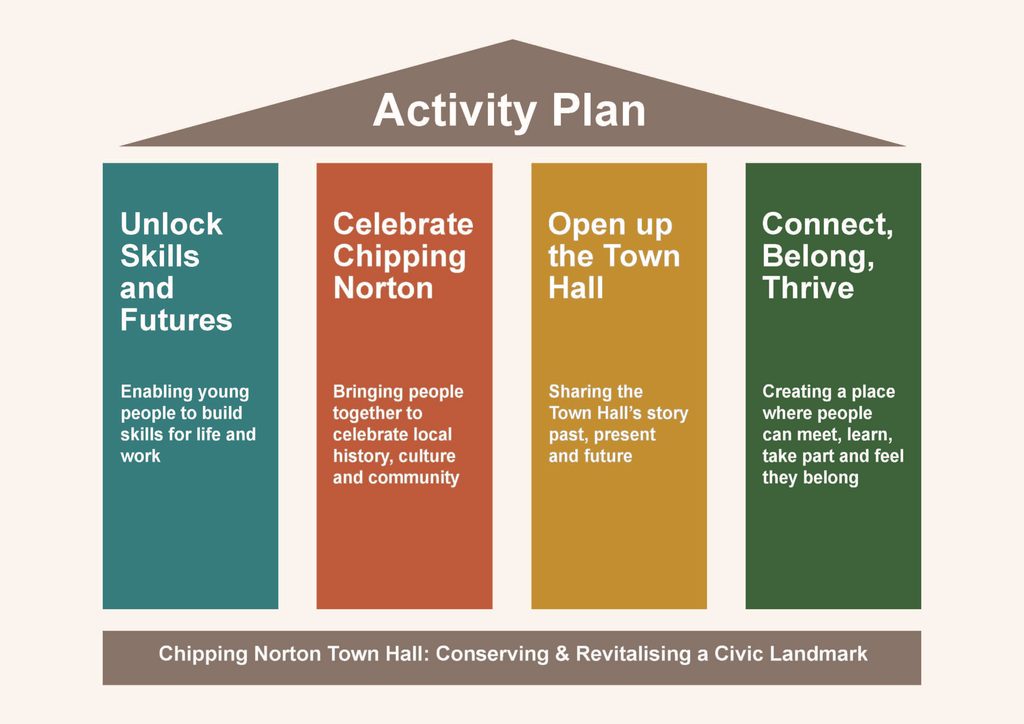
The proposals will develop as we complete surveys, receive professional advice, consider costs and listen to local people.
Timeline
Where are we now?
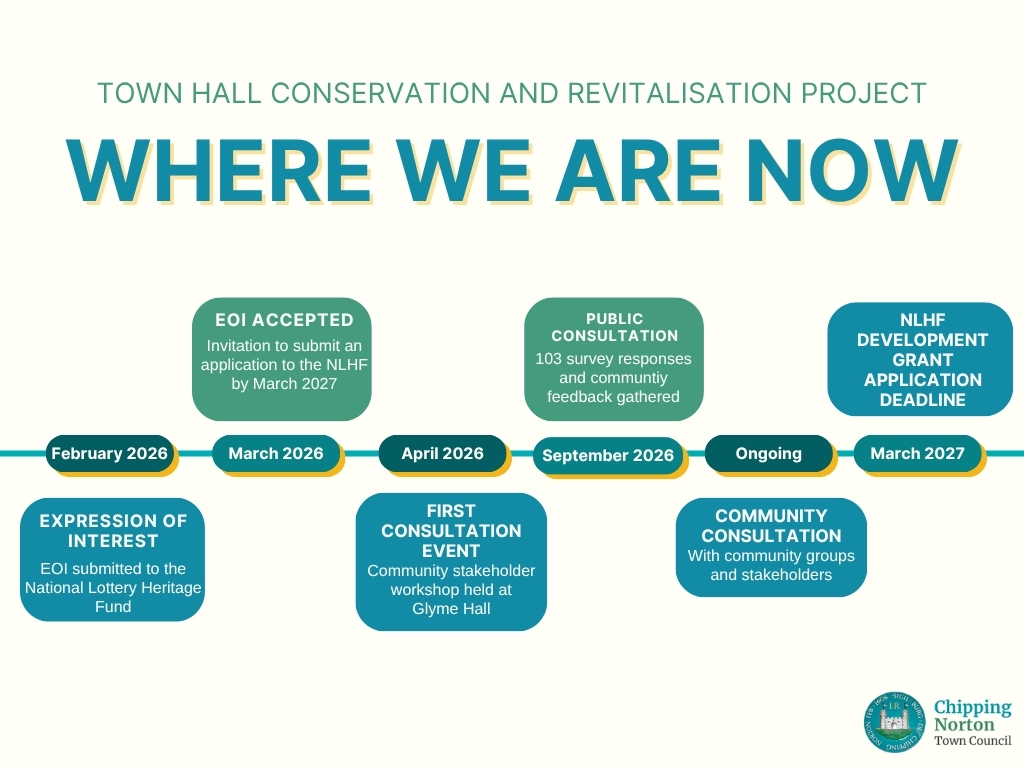
We are currently in the early development stage.
This means that the main conservation and building work has not yet started. We are preparing the information and plans needed to decide what work should take place and how to fund it.
Work completed or underway includes:
- an Expression of Interest to the National Lottery Heritage Fund;
- discussions with local groups and potential partners;
- a community workshop attended by representatives from local organisations;
- a public questionnaire;
- early advice about the building and possible improvements;
- an energy audit and review of possible energy improvements;
- work on the project’s activity plan and business planning.
The Town Council is also considering how it can contribute to the project and is developing a wider fundraising strategy.
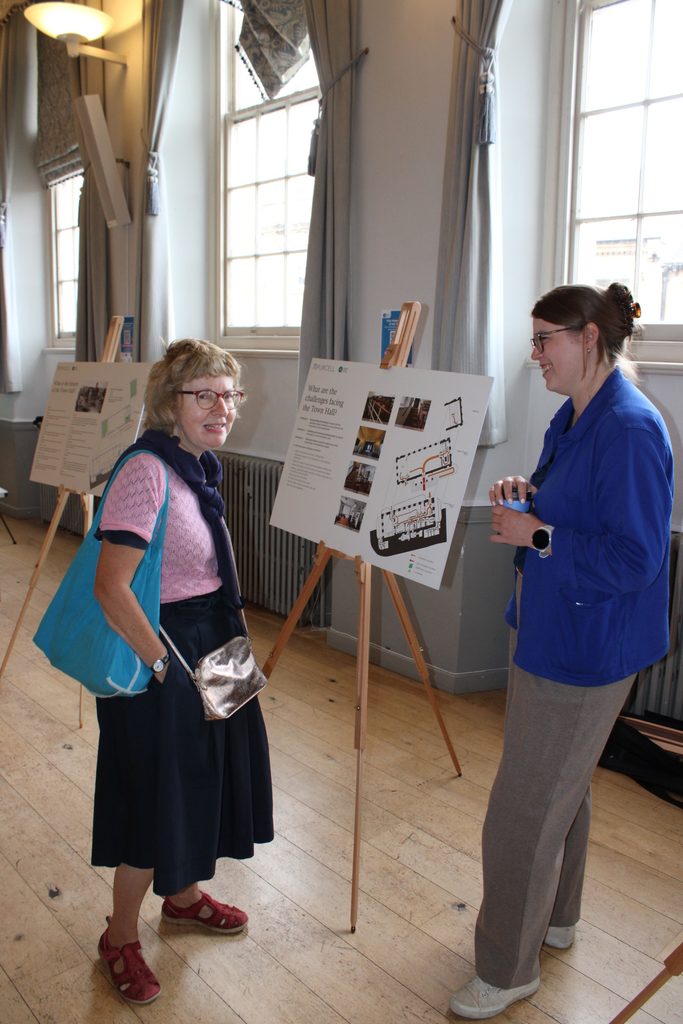
What does “development stage” mean?
The development stage is the period when we prepare the project in more detail.
During this stage, we will:
- listen to local people and potential users;
- investigate the condition of the building;
- develop possible designs and improvements;
- consider access and environmental needs;
- prepare an activity plan;
- develop a business plan;
- refine project costs;
- identify potential partners;
- develop a fundraising plan;
- prepare a future funding application.
This work will help us make informed decisions before any major conservation work begins.
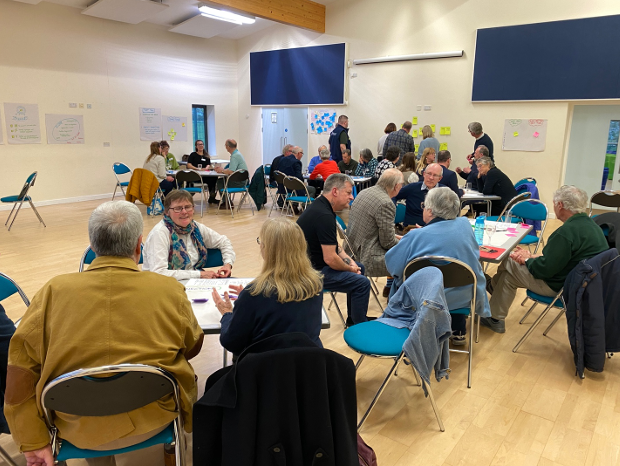
How local people are helping
The Town Hall is an important building for the local community. Local knowledge and experience will help shape the project.
We want to hear:
- what people value about the Town Hall;
- what makes it difficult to use;
- how access could be improved;
- what activities and services are needed;
- which stories about the Town Hall should be shared;
- how the building could be used in the future;
- how volunteers and local organisations could be involved.
Community engagement has already begun. A workshop with local organisations took place in April 2026, and further engagement will take place as the plans develop.
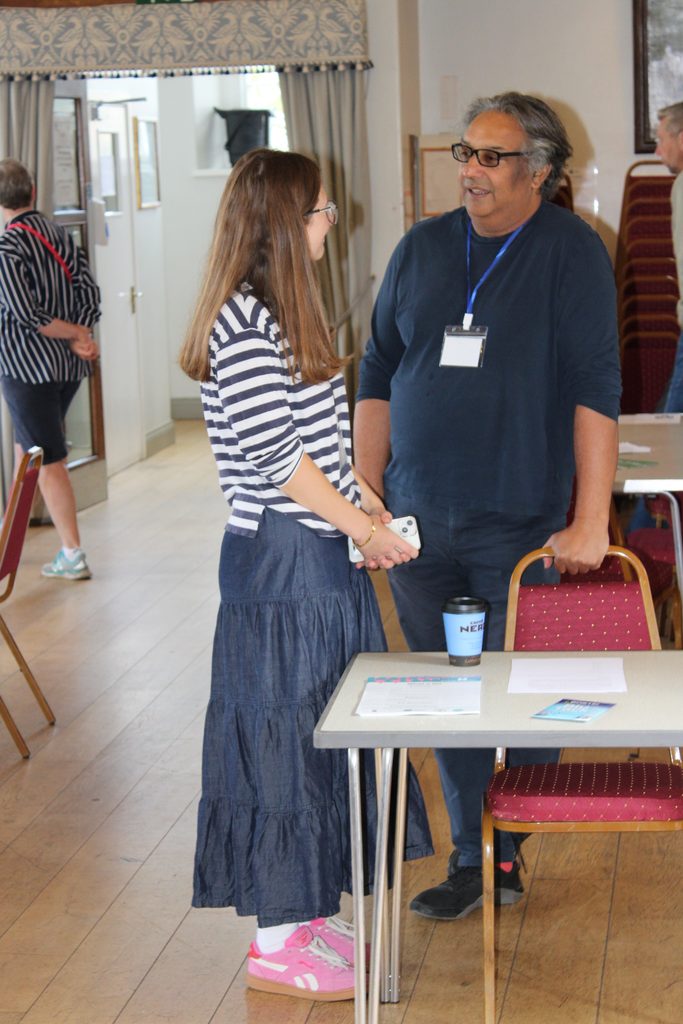
Funding the project
This is a large and ambitious project and the Town Council is exploring funding from:
- the National Lottery Heritage Fund;
- local authorities;
- charitable trusts and foundations;
- local businesses;
- community partners;
- individual donors
At this stage, funding is still being developed. We will provide clear updates when funding is confirmed
Help support the project
You can support the Town Hall project by:
- sharing your views;
- joining a consultation event;
- sharing memories, photographs or information about the building;
- suggesting a partnership;
- volunteering;
- helping us identify possible funders;
- making a donation, when this becomes available;
- sharing information about the project with others.
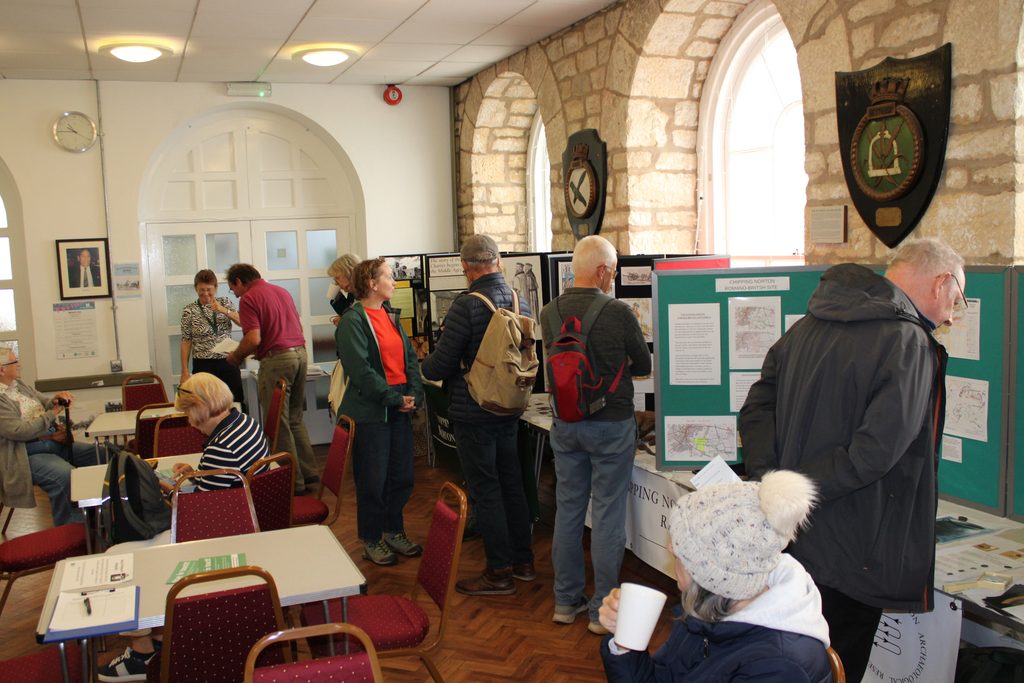
What happens next?
Over the coming months, we plan to:
1. review feedback from local people and community organisations;
2. complete further building and energy investigations;
3. develop the conservation and improvement proposals;
4. prepare the activity plan and business plan;
5. identify potential partners and sources of funding;
6. confirm the likely costs and timescale;
7. prepare a Round 1 application to the National Lottery Heritage Fund, subject to approval.
If the project receives the necessary funding, a further period of detailed planning will follow. This would include more detailed designs, surveys, costs and arrangements for the main conservation and improvement work.
No final construction date has been agreed.
Contact us
If you have a question about the project, or would like to get involved, please contact:
Chipping Norton Town Council Email: office@chippingnorton-tc.gov.uk
Telephone: 01608 642341
Address: Chipping Norton Town Hall, OX7 5NA
You can also sign up for updates:
Project Team
The future of Chipping Norton Town Hall is being shaped by a dedicated project team made up of councillors, staff, consultants and community stakeholders.
A Working Group meets regularly to develop ideas, review progress and consider feedback from the community. Supporting this is the a Sub-Committee, a formal committee of the Town Council which provides oversight and ensures that key decisions are considered through the Council’s democratic processes.
This structure allows the project to benefit from specialist expertise while remaining accountable to the community through the Town Council.
Consultants & Volunteers
Natalie Chambers – Activity Planner
Graeme Williamson – Fundraising Strategy
Neil Richardson – Project Manager
Agata Olszewska – Senior Architect, Purcell
Niall Phillips – Partner, Purcell
Justin Metcalfe – Regional Partner, Purcell
Ellie Atherton – Architect, Purcell
Sean Vassen – Subject Matter Expert, Volunteer
Will Holborow – Subject Matter Expert, Volunteer
Alison Wright – PR, Volunteer
Ian Wilson – Cost Consultant